V4 Cultural

2026
Platform Connecting Artists and Cultural Project Creators
role
Product Designer

product
Plataforma de profissionais culturais
Context
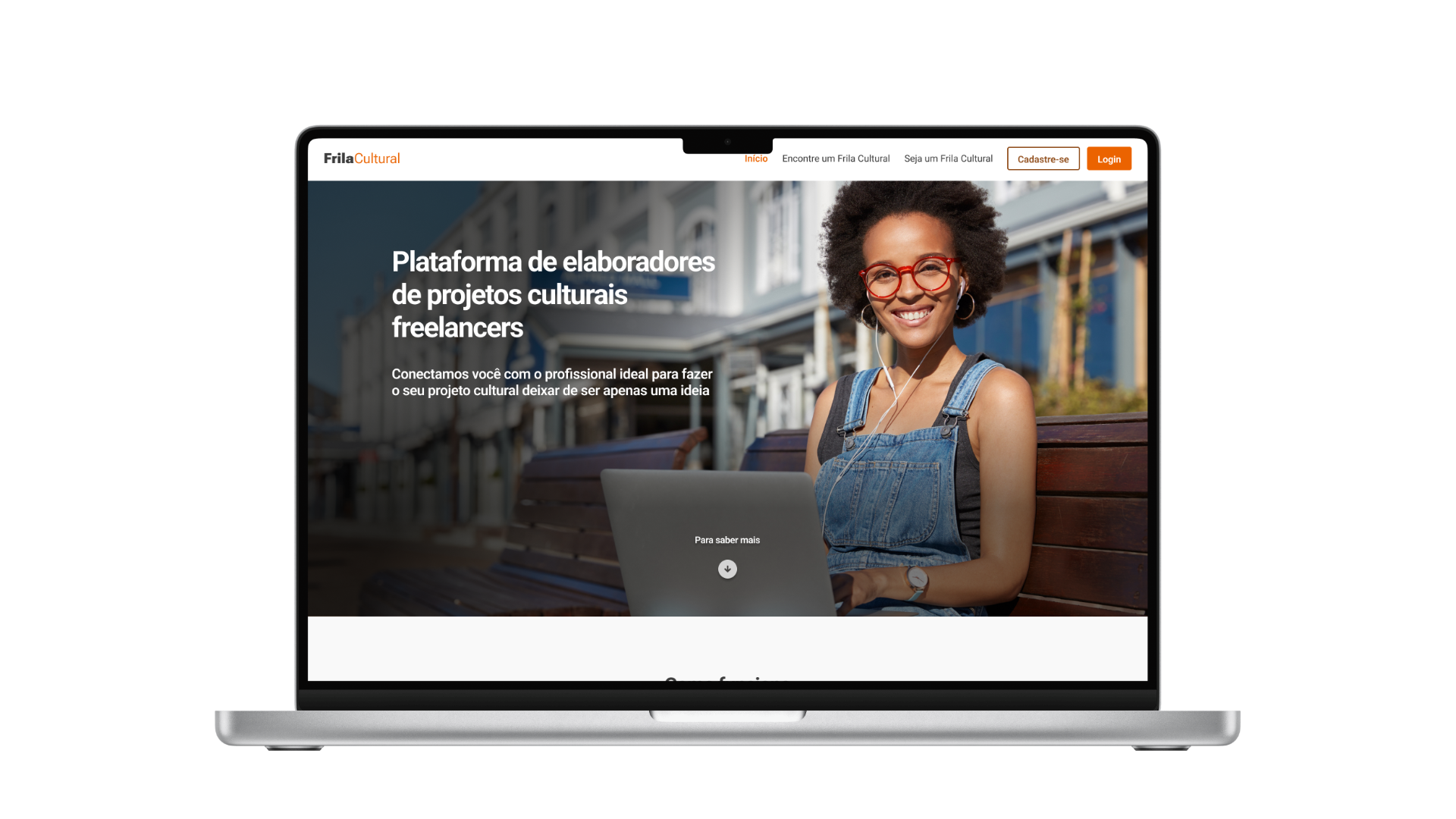
Frila Cultural was conceived as a digital platform designed to connect artists, cultural producers, and professionals specialized in developing cultural grant proposals.
The project emerged in response to challenges characteristic of the cultural sector, which still relies heavily on informal processes, referrals, and decentralized communication, as well as the lack of specialized tools and the difficulty of finding qualified professionals. In this context, the main goal was to structure a digital experience that would make the search and hiring process clearer, more reliable, and more organized, while preserving the specific characteristics and dynamics of the sector.
My Role

Pesquisa quantitativa

Pesquisa qualitativa

Personas e mapeamento

Prototipação
UX/UI Designer — única designer do time.
The Problem
The research revealed that hiring cultural project developers was largely unstructured, resulting in:
- Difficulty finding reliable professionals
- Misaligned communication
- Limited predictability throughout the process
- Lack of transparency regarding professionals' experience and areas of expertise
- Difficulty organizing projects
In addition, traditional freelancer platforms did not adequately address the specific needs of the cultural sector.
Identified Pain Points
For Clients
Heavy reliance on referrals
Lack of clarity throughout the hiring process
Difficulty evaluating professionals' areas of expertise
Decentralized communication
For Cultural Project Developers
Low professional visibility
Fluctuating demand
Difficulty organizing projects
Need for a specialized collaborative network
The Process
01
Quantitative Research
Two separate questionnaires were conducted: one for cultural project developers and another for clients and artists. The goal was to understand hiring methods, selection criteria, ways of working, and market needs.
Clients
100% worked as independent professionals
50% worked independently, without permanent collaborators
Communication was identified as a critical factor for project success
Cultural Project Developers
90% found professionals exclusively through referrals
90% considered having specialists in cultural project development important
Half had already participated in recently approved projects
02
Qualitative Research
Interviews were conducted with cultural project developers to explore the behaviors identified during the quantitative research phase. Four key insights guided the product decisions:
The cultural sector has highly specific workflows that do not fit generic platforms
Informal processes create friction and uncertainty between clients and professionals
Managing multiple grant applications simultaneously makes it difficult for project developers to stay organized
Collaborative work is common and highly valued within the sector
03
Structuring the Experience
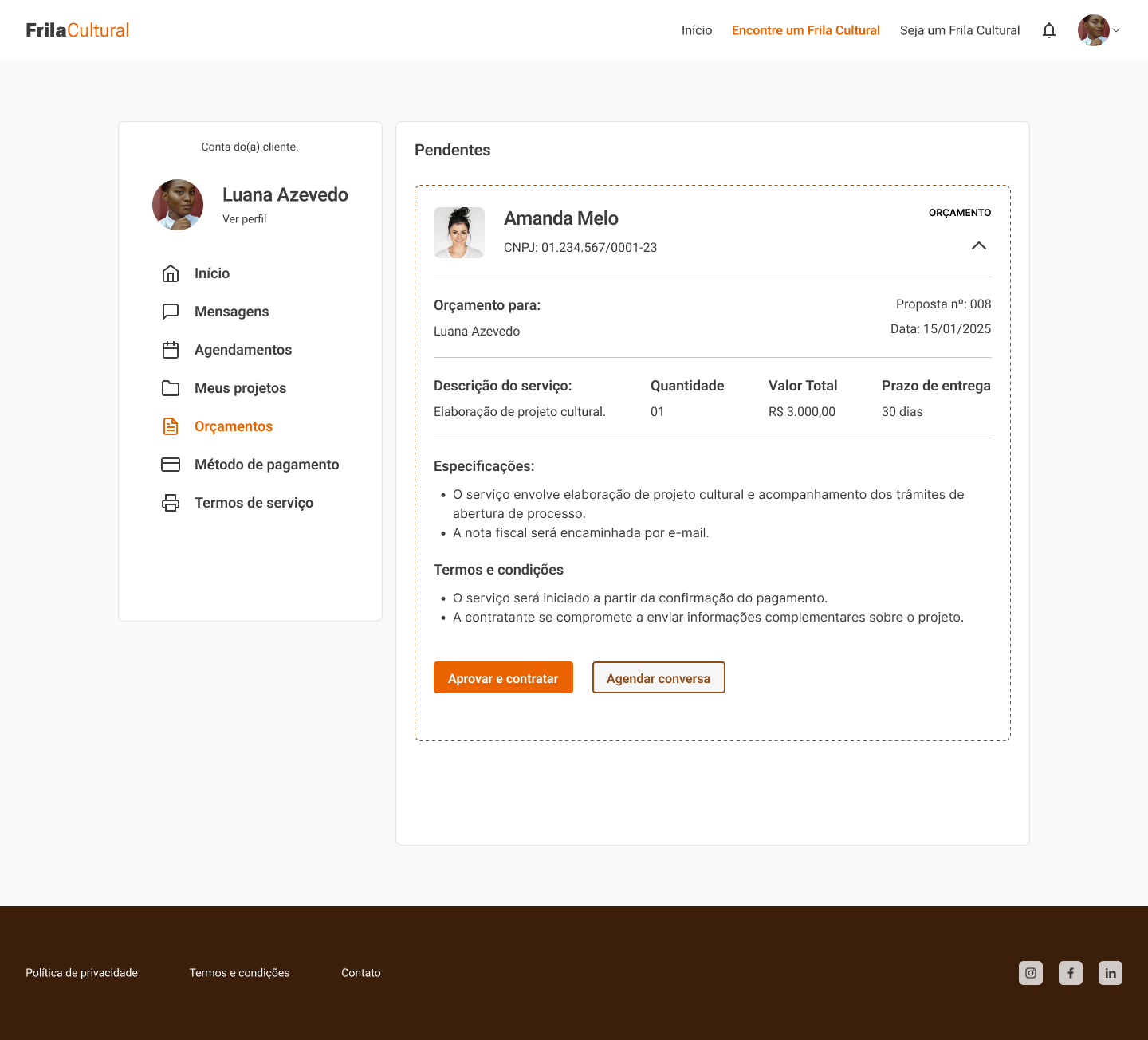
Based on the research, I defined three main product pillars, each addressing a core need identified across both user profiles:
01
Professional Search
Make it easier to find specialized project developers across different incentive laws and cultural sectors.
02
Clarity in Hiring
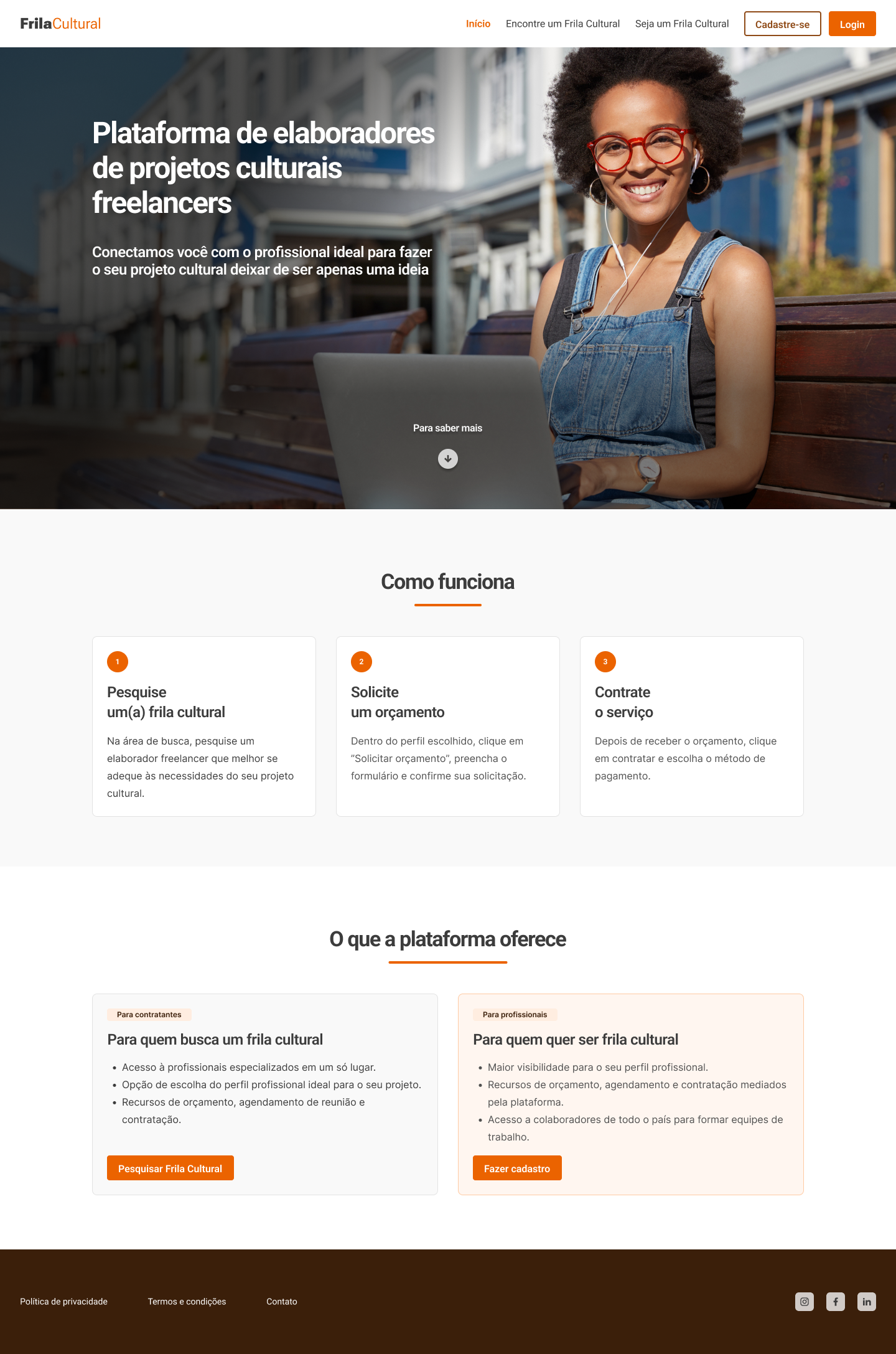
Structure the quote request process to reduce ambiguity and align expectations from the start.
03
Project Organization
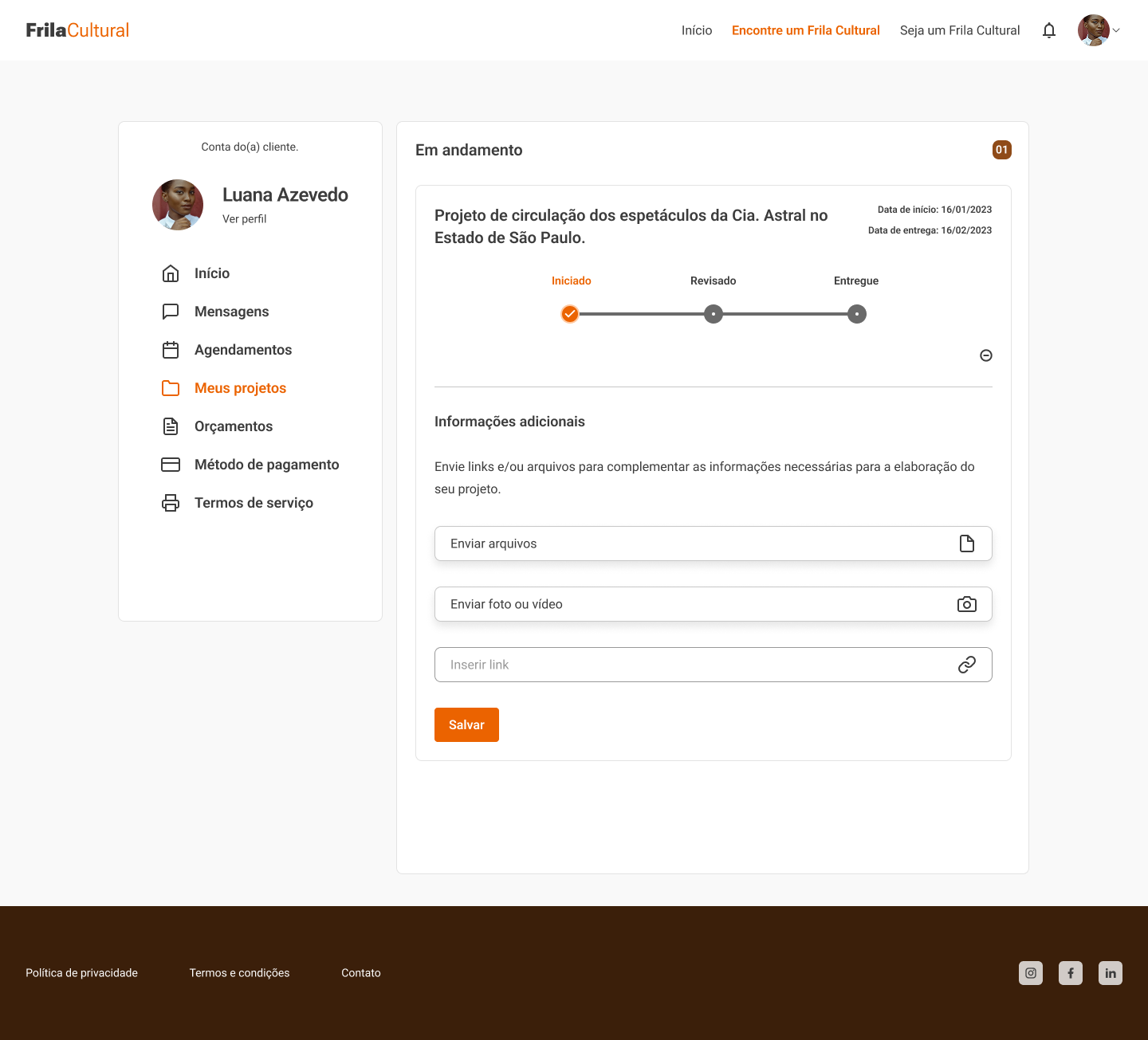
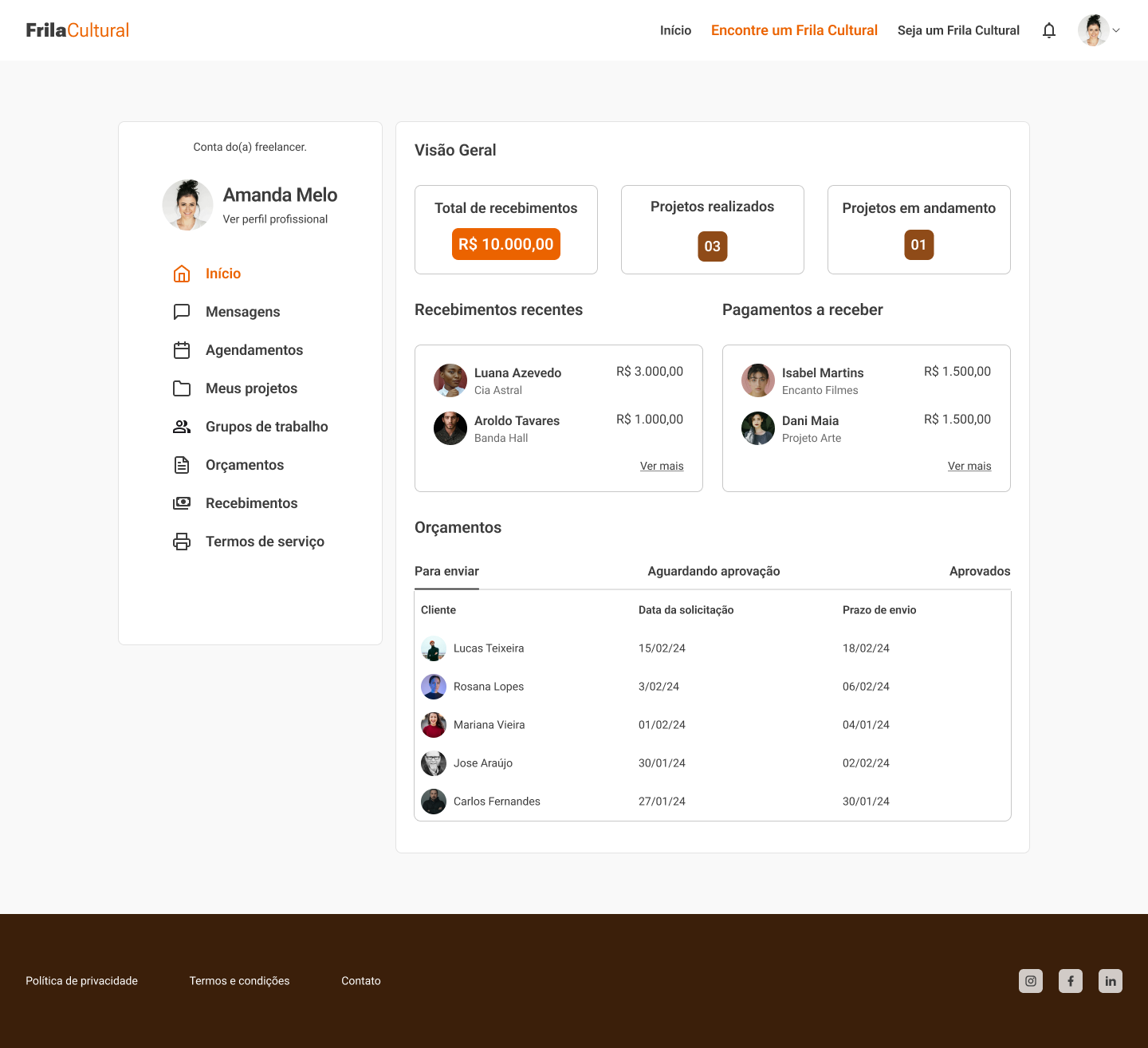
Centralize information, contacts, and request progress within the platform.
04
Design Decisions
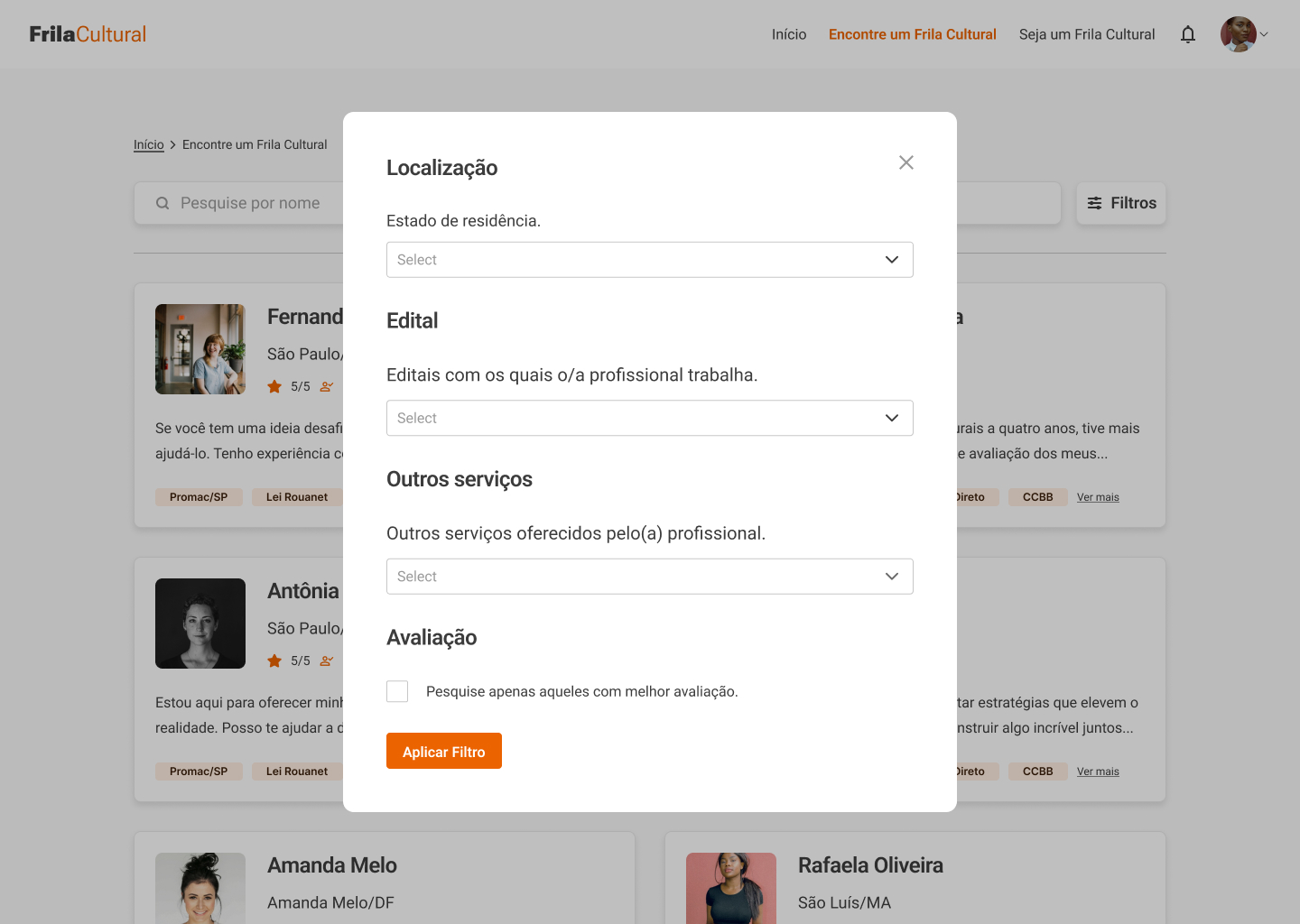
Structured Search by Expertise
Problem
Clients had difficulty identifying professionals suited to their project and specific incentive law.
Decision
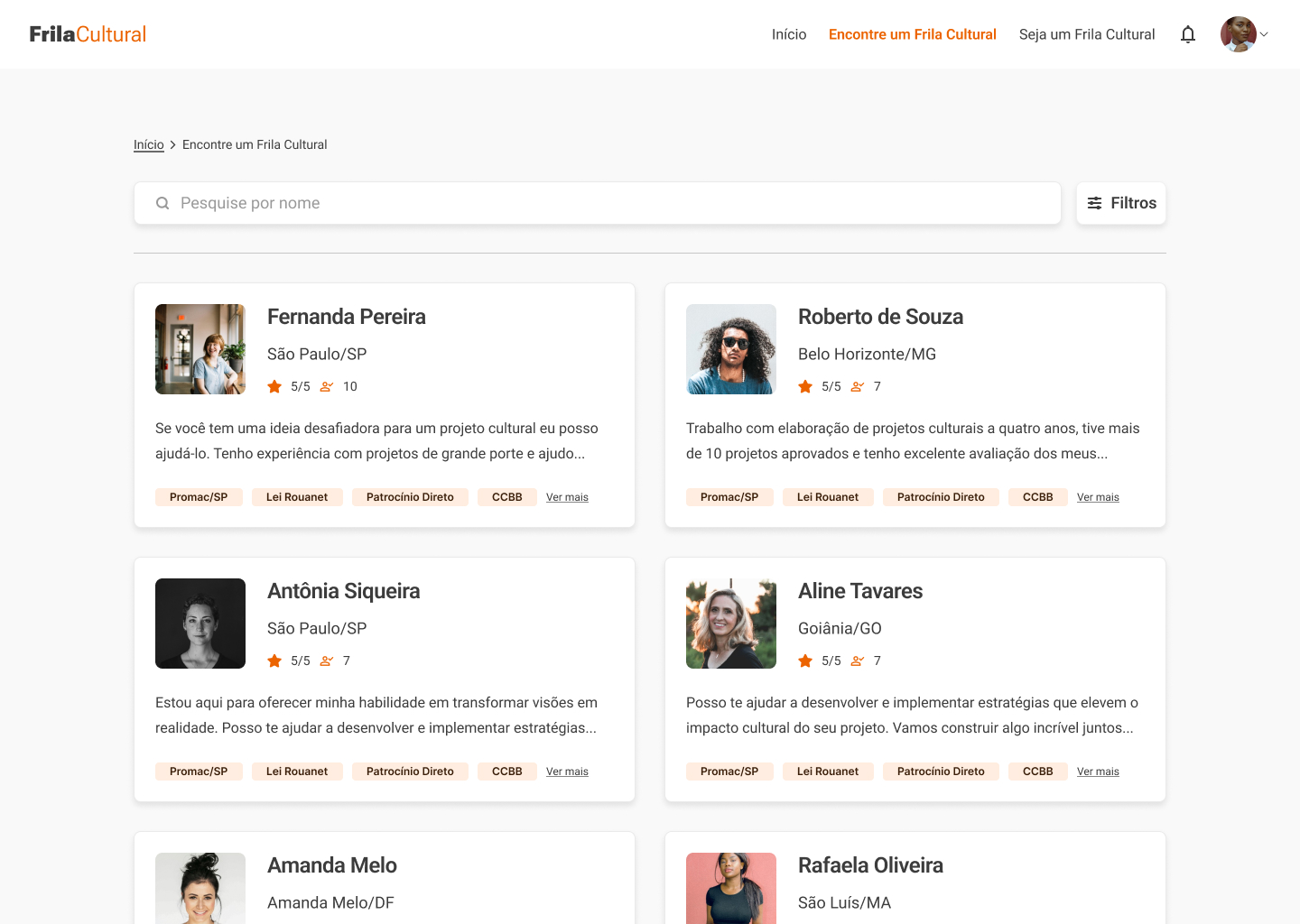
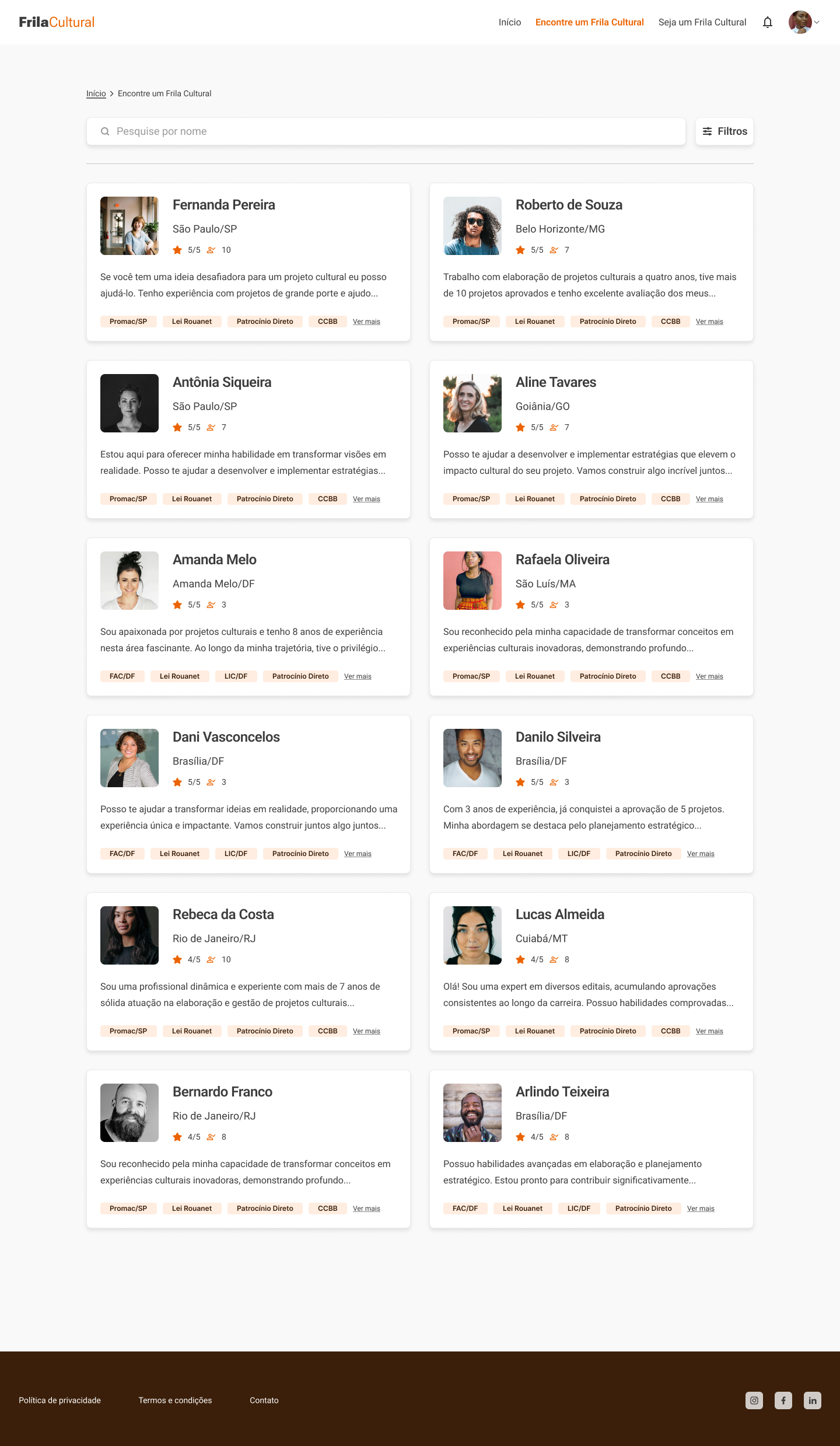
Create a searchable list with filters for areas of expertise, incentive laws, and artistic fields, increasing search accuracy and reducing reliance on informal referrals.
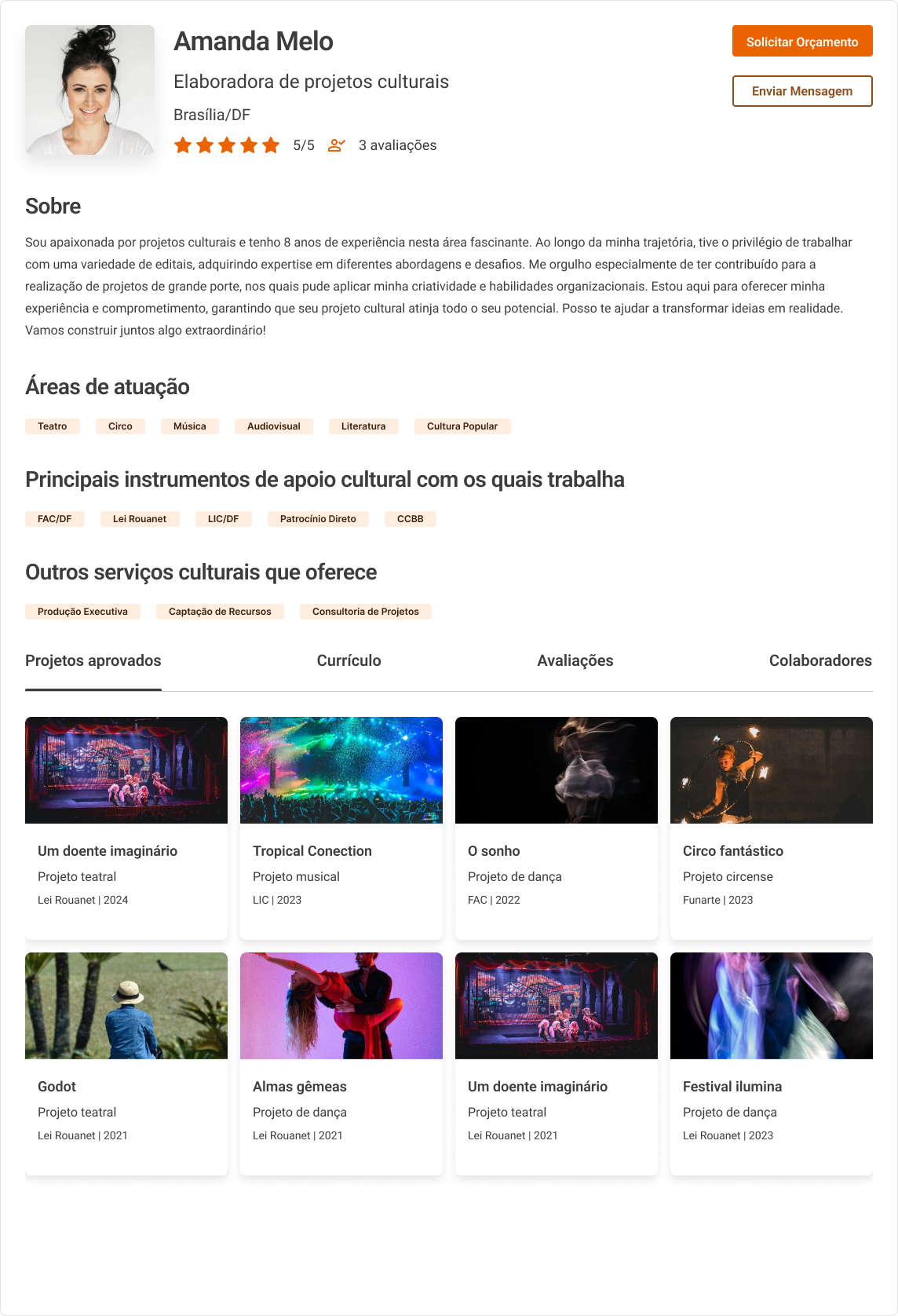
More Comprehensive Professional Profiles
Problem
Lack of clarity around project developers' experience and skills created uncertainty during the hiring process.
Decision
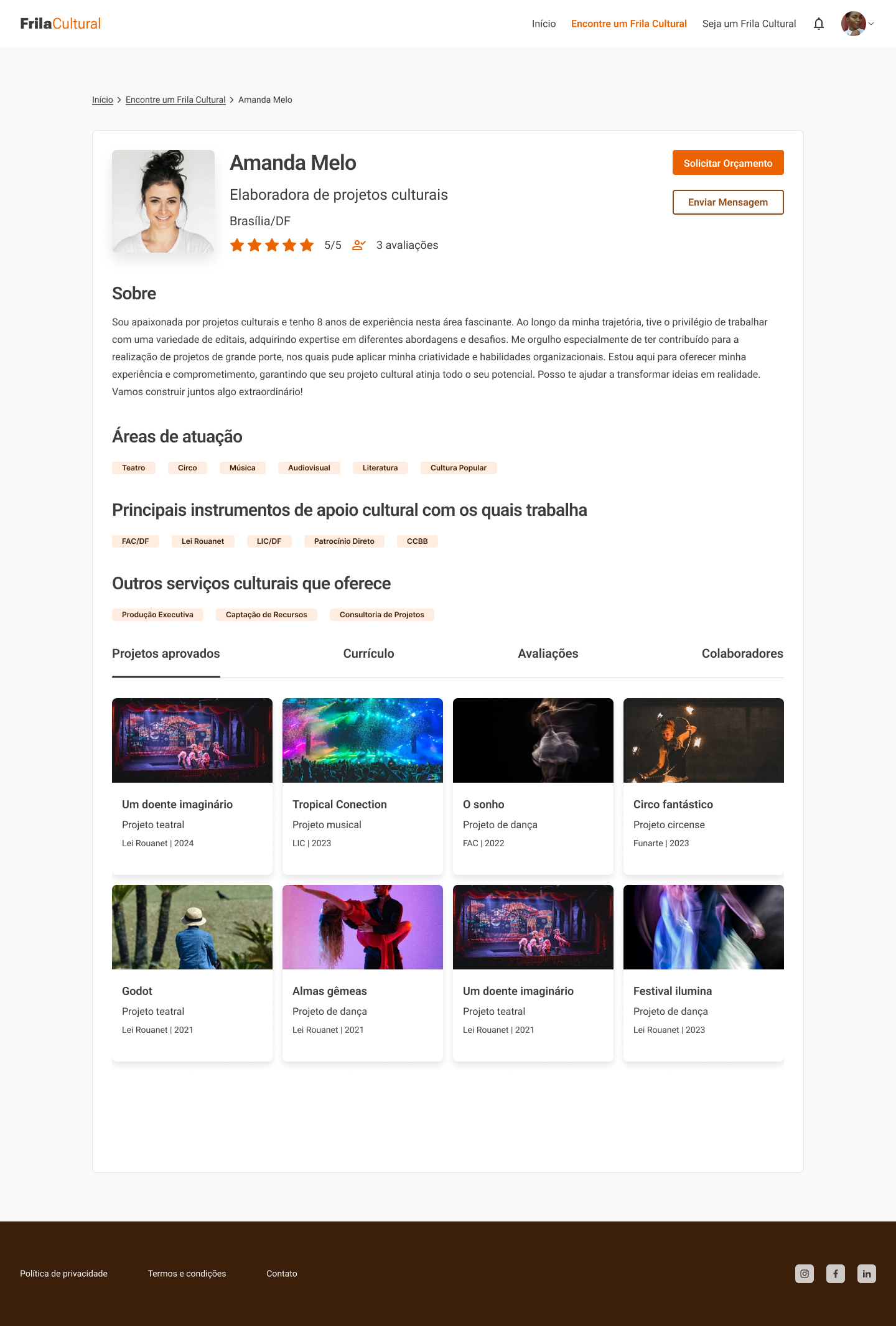
Structure profiles around areas of expertise, fields of work, experience, and detailed professional information, making evaluation easier and increasing confidence before hiring.
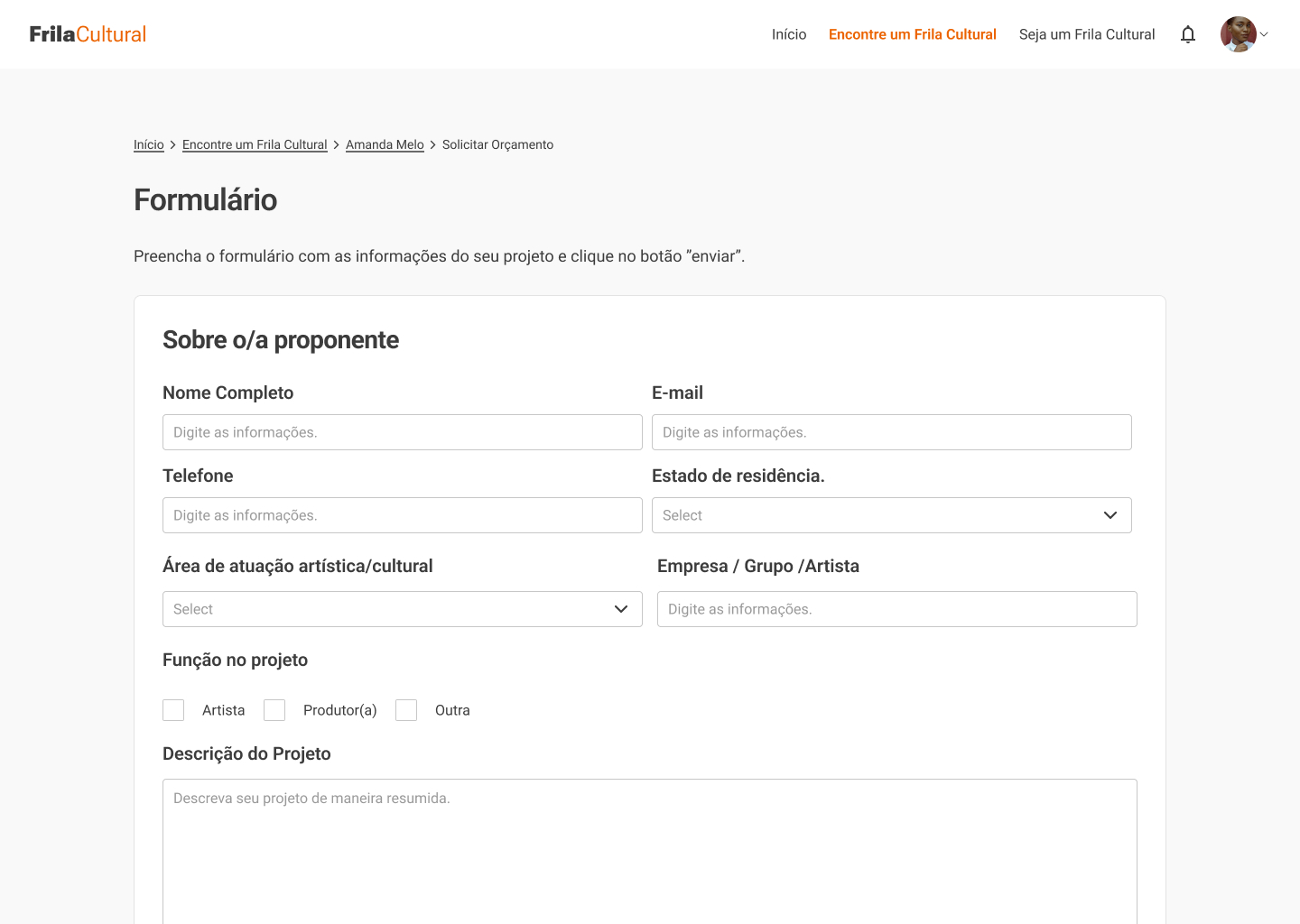
Guided Quote Request
Problem
Initial communication was poorly structured, leading to misunderstandings and misalignment from the first interaction.
Decision
Create a request form with standardized information about the cultural project, reducing ambiguity and improving initial alignment between both parties.
Scan-Friendly Interface
Problem
Users needed to quickly compare multiple professionals before deciding whom to contact.
Decision
Use organized cards with easily scannable information about skills and areas of expertise, facilitating decision-making without cognitive overload.
Solution: Key Screens
Solution: Main Flow
Results
Research with Two User Profiles
Quantitative questionnaires and qualitative interviews conducted with real cultural-sector professionals, including project developers and clients.
Data-Driven Personas
Personas built from patterns identified through research rather than assumptions.
High-Fidelity Prototype
The platform's main flow was prototyped with the core functionalities for both user profiles.

Context-Driven Product Definition
Product pillars, workflows, and functionalities were defined based on the sector's real needs rather than generic benchmarks.
Challenges
Project Limitations
- Functional development was not included, as the goal of this stage was to validate the concept and structure the experience before seeking investment
- Validation was conducted with a small group of users recruited for the initial research
- It was not possible to test the hiring flow in real-world conditions
Ideal Next Steps
- Develop the platform based on the approved prototype, prioritizing the main search and hiring flow
- Conduct additional usability testing with artists and project developers before launch
- Gradually implement secondary features, such as a rating system and collaborative tools for project developers
Key Learnings
- Niche products require a deep understanding of their specific context.
- Structuring communication can reduce uncertainty in hiring processes.
- Research was essential to uncover needs that were not immediately visible in a market that is still relatively under-digitized.
- In service marketplaces, trust is just as important as functionality.

Get in touch

anavazuxui@gmail.com

© 2026 Ana Vaz — UX/UI Designer

Back to portfolio
Ana Vaz
V4 Cultural
2026
Platform Connecting Artists and Cultural Project Creators
role:
Product Designer

product:
Plataforma de profissionais culturais
Context
Frila Cultural was conceived as a digital platform designed to connect artists, cultural producers, and professionals specialized in developing cultural grant proposals.
The project emerged in response to challenges characteristic of the cultural sector, which still relies heavily on informal processes, referrals, and decentralized communication, as well as the lack of specialized tools and the difficulty of finding qualified professionals. In this context, the main goal was to structure a digital experience that would make the search and hiring process clearer, more reliable, and more organized, while preserving the specific characteristics and dynamics of the sector.
My Role
Pesquisa quantitativa
Pesquisa qualitativa
Personas e mapeamento
Prototipação
UX/UI Designer — única designer do time.
The Problem
The research revealed that hiring cultural project developers was largely unstructured, resulting in:
- Difficulty finding reliable professionals
- Misaligned communication
- Limited predictability throughout the process
- Lack of transparency regarding professionals' experience and areas of expertise
- Difficulty organizing projects
In addition, traditional freelancer platforms did not adequately address the specific needs of the cultural sector.
Identified Pain Points
For Clients
Heavy reliance on referrals
Lack of clarity throughout the hiring process
Difficulty evaluating professionals' areas of expertise
Decentralized communication
For Cultural Project Developers
Low professional visibility
Fluctuating demand
Difficulty organizing projects
Need for a specialized collaborative network
The Process
01
Quantitative Research
Two separate questionnaires were conducted: one for cultural project developers and another for clients and artists. The goal was to understand hiring methods, selection criteria, ways of working, and market needs.
Clients
100% worked as independent professionals
50% worked independently, without permanent collaborators
Communication was identified as a critical factor for project success
Cultural Project Developers
90% found professionals exclusively through referrals
90% considered having specialists in cultural project development important
Half had already participated in recently approved projects
02
Qualitative Research
Interviews were conducted with cultural project developers to explore the behaviors identified during the quantitative research phase. Four key insights guided the product decisions:
The cultural sector has highly specific workflows that do not fit generic platforms
Informal processes create friction and uncertainty between clients and professionals
Managing multiple grant applications simultaneously makes it difficult for project developers to stay organized
Collaborative work is common and highly valued within the sector
03
Structuring the Experience
Based on the research, I defined three main product pillars, each addressing a core need identified across both user profiles:
01
Professional Search
Make it easier to find specialized project developers across different incentive laws and cultural sectors.
02
Clarity in Hiring
Structure the quote request process to reduce ambiguity and align expectations from the start.
03
Project Organization
Centralize information, contacts, and request progress within the platform.
04
Design Decisions
Structured Search by Expertise
Problem
Clients had difficulty identifying professionals suited to their project and specific incentive law.
Decision
Create a searchable list with filters for areas of expertise, incentive laws, and artistic fields, increasing search accuracy and reducing reliance on informal referrals.
More Comprehensive Professional Profiles
Problem
Lack of clarity around project developers' experience and skills created uncertainty during the hiring process.
Decision
Structure profiles around areas of expertise, fields of work, experience, and detailed professional information, making evaluation easier and increasing confidence before hiring.
Guided Quote Request
Problem
Initial communication was poorly structured, leading to misunderstandings and misalignment from the first interaction.
Decision
Create a request form with standardized information about the cultural project, reducing ambiguity and improving initial alignment between both parties.
Scan-Friendly Interface
Problem
Users needed to quickly compare multiple professionals before deciding whom to contact.
Decision
Use organized cards with easily scannable information about skills and areas of expertise, facilitating decision-making without cognitive overload.
Solution: Key Screens
Solution: Main Flow
Results
Research with Two User Profiles
Quantitative questionnaires and qualitative interviews conducted with real cultural-sector professionals, including project developers and clients.
Data-Driven Personas
Personas built from patterns identified through research rather than assumptions.
High-Fidelity Prototype
The platform's main flow was prototyped with the core functionalities for both user profiles.
Context-Driven Product Definition
Product pillars, workflows, and functionalities were defined based on the sector's real needs rather than generic benchmarks.
Challenges
Project Limitations
- Functional development was not included, as the goal of this stage was to validate the concept and structure the experience before seeking investment
- Validation was conducted with a small group of users recruited for the initial research
- It was not possible to test the hiring flow in real-world conditions
Ideal Next Steps
- Develop the platform based on the approved prototype, prioritizing the main search and hiring flow
- Conduct additional usability testing with artists and project developers before launch
- Gradually implement secondary features, such as a rating system and collaborative tools for project developers
Key Learnings
- Niche products require a deep understanding of their specific context.
- Structuring communication can reduce uncertainty in hiring processes.
- Research was essential to uncover needs that were not immediately visible in a market that is still relatively under-digitized.
- In service marketplaces, trust is just as important as functionality.
Explore other projects
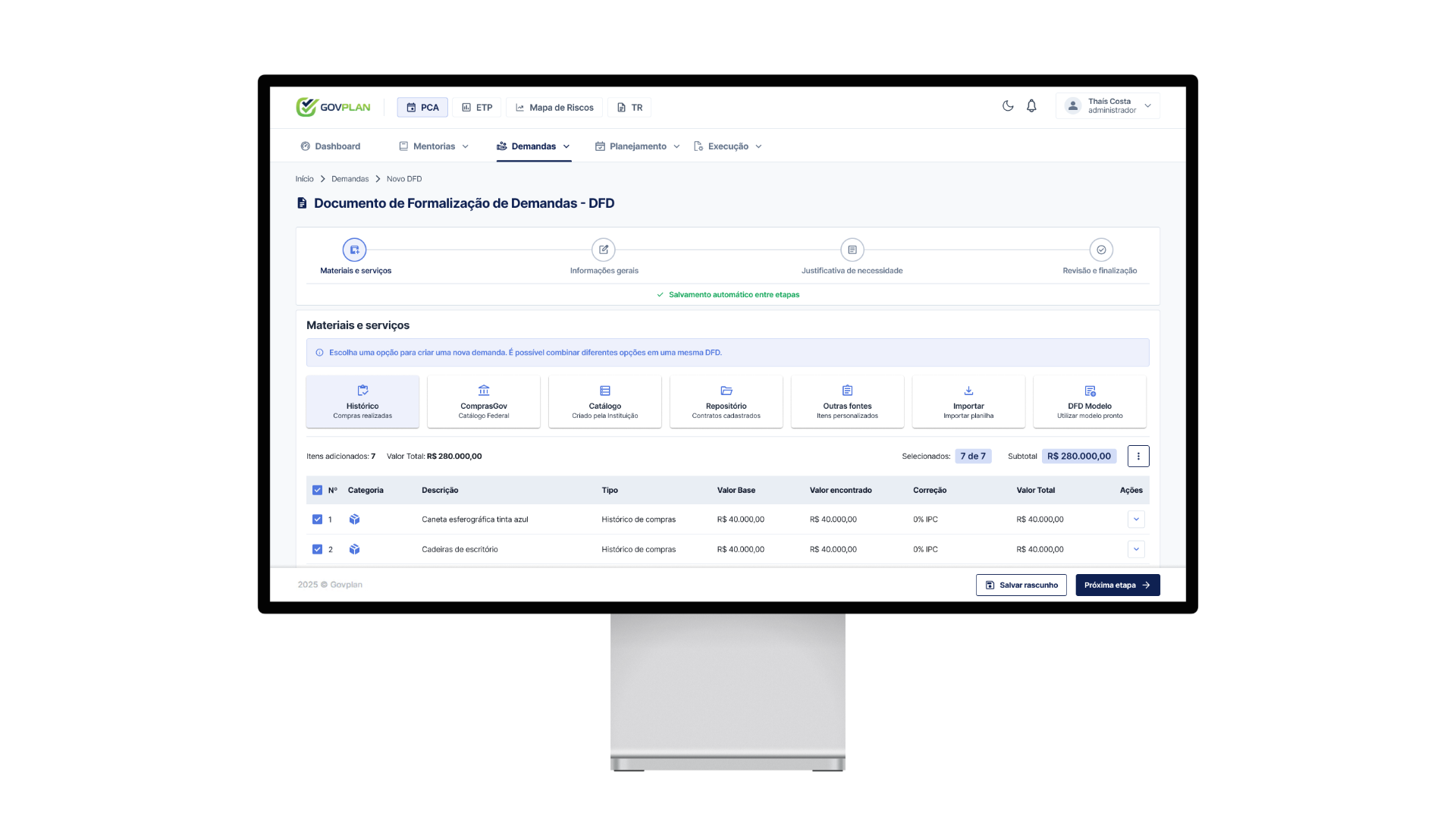
Govplan
Strategic redesign of a critical workflow in a public-sector management system.


Acessar com senha
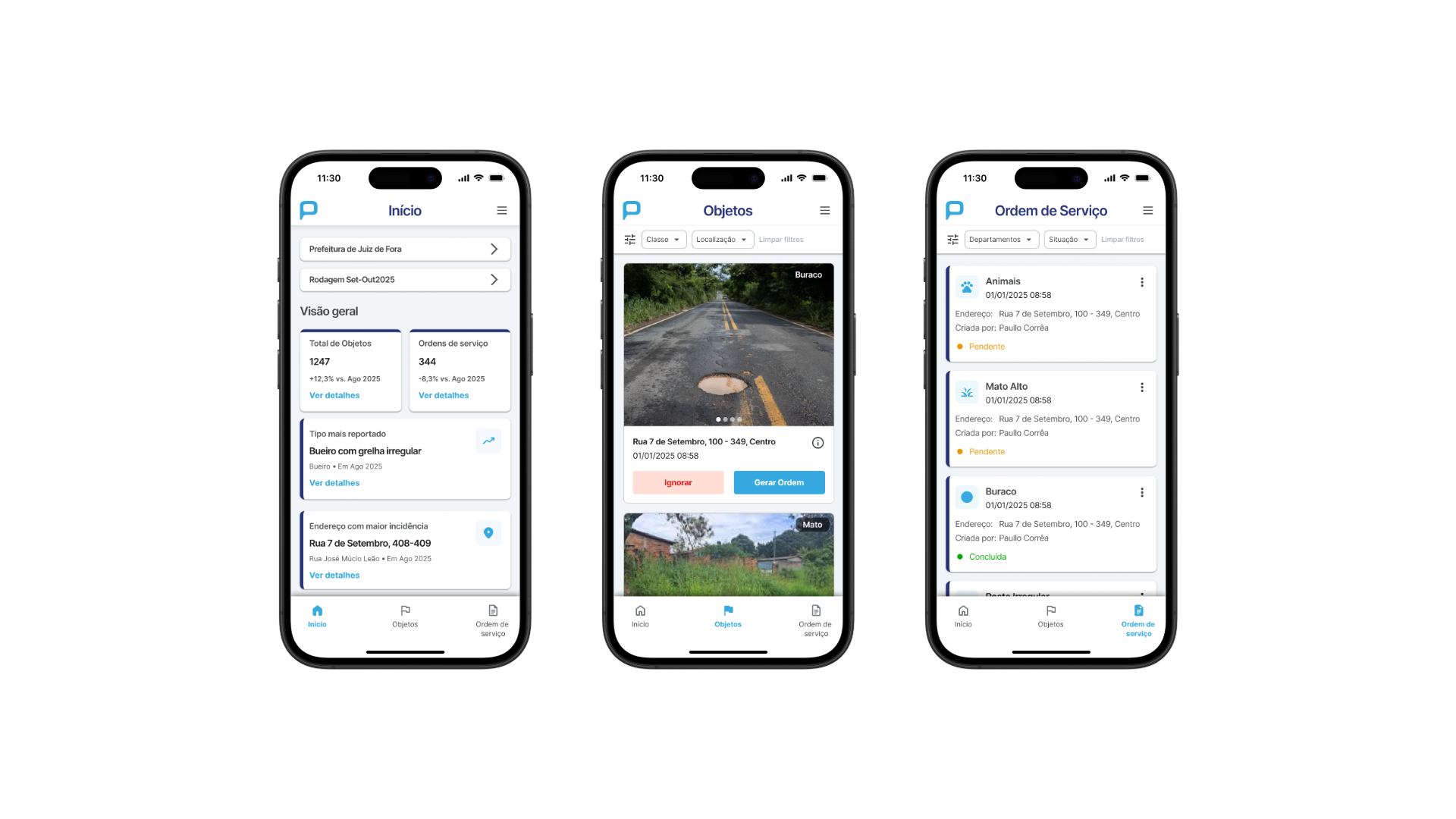
Mapzer
Adapting a web mapping system for mobile devices
Acessar com senha
Get in touch
anavazuxui@gmail.com
© 2026 Ana Vaz — UX/UI Designer
Back to portfolio
Ana Vaz
V4 Cultural
2026
Platform Connecting Artists and Cultural Project Creators
role:
Product Designer
product:
Web Platform for Cultural Professionals
Context
Frila Cultural was conceived as a digital platform designed to connect artists, cultural producers, and professionals specialized in developing cultural grant proposals.
The project emerged in response to challenges characteristic of the cultural sector, which still relies heavily on informal processes, referrals, and decentralized communication, as well as the lack of specialized tools and the difficulty of finding qualified professionals. In this context, the main goal was to structure a digital experience that would make the search and hiring process clearer, more reliable, and more organized, while preserving the specific characteristics and dynamics of the sector.
My Role
Quantitative Research
Qualitative Research
Personas and User Mapping
Prototyping
UX/UI Designer — the only designer on the team.
The Problem
The research revealed that hiring cultural project developers was largely unstructured, resulting in:
- Difficulty finding reliable professionals
- Misaligned communication
- Limited predictability throughout the process
- Lack of transparency regarding professionals' experience and areas of expertise
- Difficulty organizing projects
In addition, traditional freelancer platforms did not adequately address the specific needs of the cultural sector.
Identified Pain Points
For Clients
Heavy reliance on referrals
Lack of clarity throughout the hiring process
Difficulty evaluating professionals' areas of expertise
Decentralized communication
For Cultural Project Developers
Low professional visibility
Fluctuating demand
Difficulty organizing projects
Need for a specialized collaborative network
The Process
01
Quantitative Research
Two separate questionnaires were conducted: one for cultural project developers and another for clients and artists. The goal was to understand hiring methods, selection criteria, ways of working, and market needs.
Clients
100% worked as independent professionals
50% worked independently, without permanent collaborators
Communication was identified as a critical factor for project success
Cultural Project Developers
90% found professionals exclusively through referrals
90% considered having specialists in cultural project development important
Half had already participated in recently approved projects
02
Qualitative Research
Interviews were conducted with cultural project developers to explore the behaviors identified during the quantitative research phase. Four key insights guided the product decisions:
The cultural sector has highly specific workflows that do not fit generic platforms
Informal processes create friction and uncertainty between clients and professionals
Managing multiple grant applications simultaneously makes it difficult for project developers to stay organized
Collaborative work is common and highly valued within the sector
03
Structuring the Experience
Based on the research, I defined three main product pillars, each addressing a core need identified across both user profiles:
01
Professional Search
Make it easier to find specialized project developers across different incentive laws and cultural sectors.
02
Clarity in Hiring
Structure the quote request process to reduce ambiguity and align expectations from the start.
03
Project Organization
Centralize information, contacts, and request progress within the platform.
04
Design Decisions
Structured Search by Expertise
Problem
Clients had difficulty identifying professionals suited to their project and specific incentive law.
Decision
Create a searchable list with filters for areas of expertise, incentive laws, and artistic fields, increasing search accuracy and reducing reliance on informal referrals.
More Comprehensive Professional Profiles
Problem
Lack of clarity around project developers' experience and skills created uncertainty during the hiring process.
Decision
Structure profiles around areas of expertise, fields of work, experience, and detailed professional information, making evaluation easier and increasing confidence before hiring.
Guided Quote Request
Problem
Initial communication was poorly structured, leading to misunderstandings and misalignment from the first interaction.
Decision
Create a request form with standardized information about the cultural project, reducing ambiguity and improving initial alignment between both parties.
Scan-Friendly Interface
Problem
Users needed to quickly compare multiple professionals before deciding whom to contact.
Decision
Use organized cards with easily scannable information about skills and areas of expertise, facilitating decision-making without cognitive overload.
Solution: Key Screens
Solution: Main Flow
Results
Research with Two User Profiles
Quantitative questionnaires and qualitative interviews conducted with real cultural-sector professionals, including project developers and clients.
Data-Driven Personas
Personas built from patterns identified through research rather than assumptions.
High-Fidelity Prototype
The platform's main flow was prototyped with the core functionalities for both user profiles.
Context-Driven Product Definition
Product pillars, workflows, and functionalities were defined based on the sector's real needs rather than generic benchmarks.
Challenges
Project Limitations
- Functional development was not included, as the goal of this stage was to validate the concept and structure the experience before seeking investment
- Validation was conducted with a small group of users recruited for the initial research
- It was not possible to test the hiring flow in real-world conditions
Ideal Next Steps
- Develop the platform based on the approved prototype, prioritizing the main search and hiring flow
- Conduct additional usability testing with artists and project developers before launch
- Gradually implement secondary features, such as a rating system and collaborative tools for project developers
Key Learnings
- Niche products require a deep understanding of their specific context.
- Structuring communication can reduce uncertainty in hiring processes.
- Research was essential to uncover needs that were not immediately visible in a market that is still relatively under-digitized.
- In service marketplaces, trust is just as important as functionality.
Explore other projects
Govplan
Strategic redesign of a critical workflow in a public-sector management system.

Access with password
Mapzer
Adapting a web mapping system for mobile devices

Access with password
Get in touch
anavazuxui@gmail.com
© 2026 Ana Vaz — UX/UI Designer